Soy Wax vs Paraffin Candles: Which Is Safer for Your Home?
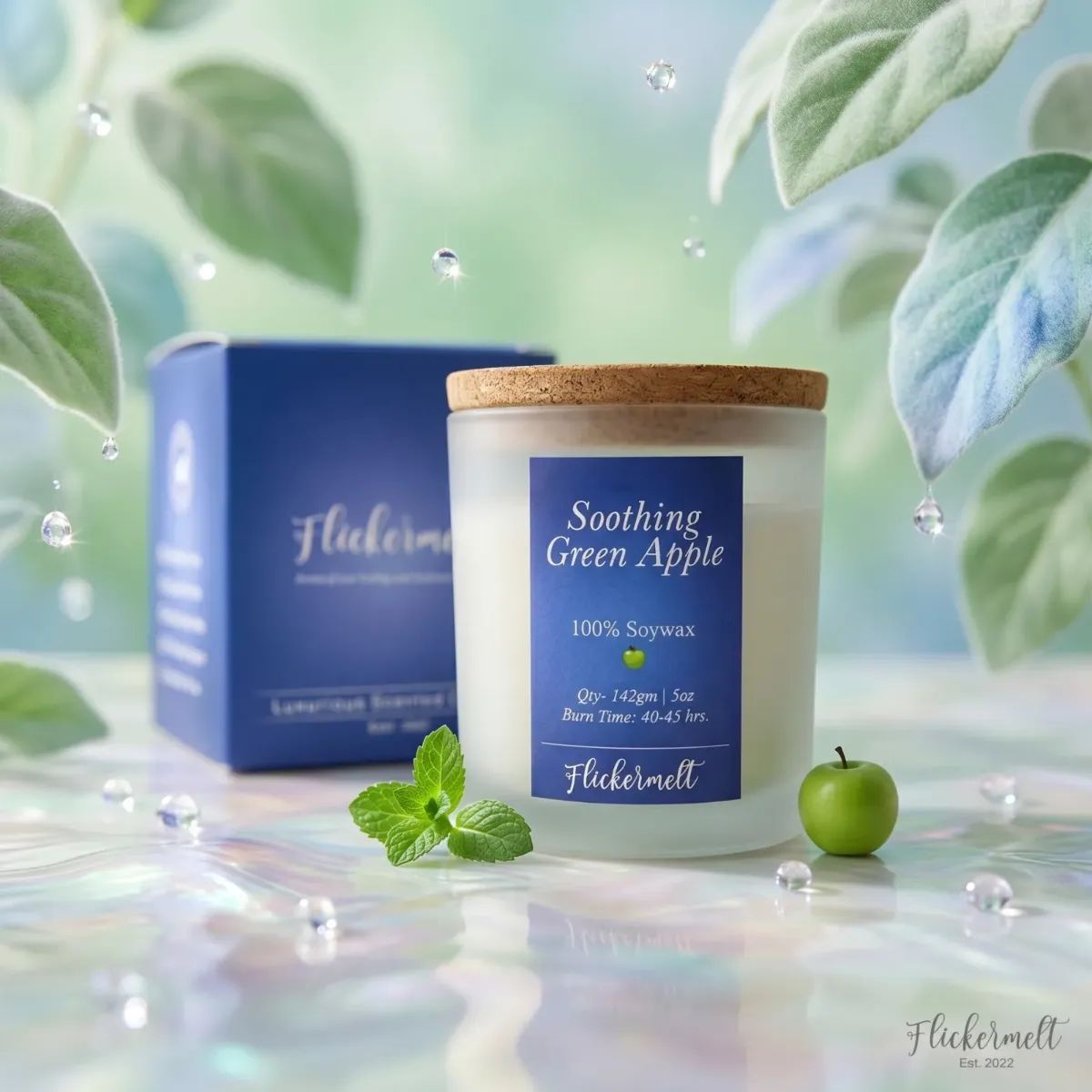
Soy wax candles burn cleaner, last longer and are kinder to indoor air than paraffin. Here is what actually changes when you switch — and why we only pour soy at Flickermelt.
The short answer
If you burn candles regularly in a closed Indian apartment, switching from paraffin to soy is one of the easiest indoor-air upgrades you can make. Soy wax burns at a cooler temperature, releases far less soot, and is made from a renewable crop instead of a petroleum by-product.
That said, "soy is always better" is too simple. The full picture is worth understanding before you spend on a premium soy candle.
What paraffin actually is
Paraffin wax is a by-product of crude-oil refining. It is cheap, easy to colour and scent, and it holds fragrance well — which is why most mass-market candles in India still use it. The trade-off is what it produces when it burns: a higher quantity of fine particulate matter, traces of toluene and benzene, and visible black soot that settles on walls, ceilings and curtains over time.
In a well-ventilated room with occasional use, that exposure is small. In a closed bedroom burning a paraffin candle every night, it adds up.
Why soy wax burns differently
Soy wax is made by hydrogenating soybean oil. It is a solid vegetable fat — closer chemically to ghee than to crude oil. When it burns:
- It melts at a lower temperature (about 50°C versus 65°C for paraffin), so the flame is cooler and the wax pool is gentler on glass jars.
- It releases negligible soot. After 50+ hours of burning a soy candle in the same spot, you will not see the black smudge that paraffin leaves on a ceiling.
- It is biodegradable. Spilled soy wax washes off skin and fabric with warm soapy water; paraffin does not.
- It burns roughly 30–50% longer per gram, which mostly offsets the higher up-front cost.
What soy is not better at
There are two honest trade-offs. First, soy wax does not hold synthetic fragrance oil as easily as paraffin — well-made soy candles use higher-quality oils at slightly lower loads, which is why they smell more "natural" but sometimes less aggressive. If you like a candle that perfumes an entire floor of a house on minute one, paraffin will do that more easily.
Second, pure soy wax sometimes develops "frosting" — a white crystalline bloom on the surface. It is harmless and a sign of unblended soy, but it can look like a defect. Reputable makers (us included) accept this as part of using a natural wax.
How to actually tell what you are buying
In India, candle labels are often vague. A few quick checks:
- "100% soy" or "pure soy wax" in plain text — not "soy blend" (which is mostly paraffin with a small soy fraction)
- A cotton or wood wick with no metal core (hold a small magnet near the wick base — it should not stick)
- A clear ingredient list mentioning the fragrance oil type (essential oil, phthalate-free fragrance, etc.)
- Burn time stated honestly — a 200g jar should deliver 35–45 hours
Why we pour only soy
Every candle we hand-pour at our Flickermelt studio in Indore is 100% soy wax, with cotton wicks and phthalate-free fragrance oils. We chose soy for the cleaner burn, the longer life and the smaller footprint — but mostly because we wanted to make a candle our own families would be happy to light every night.
If you want to try a soy candle without committing to a full jar, our wax melts are the easiest entry point. They are pure soy, hand-poured the same way, and they cost a fraction of a full candle.
Keep reading
- Tea Light Candles Price in India: What to Look For (2026)
A professional guide to tea light candles price in India, exploring the shift from mass-produced paraffin to artisanal soy wax formats for the 2026 buyer.
- Soy Wax Candles Burn Time: 150g Longevity in India (2026)
A professional analysis of how artisanal 150g soy wax candles perform in the Indian home, exploring the physics of botanical wax and slow-burning rituals.
- Floating Candles Price in India: What to Look For (2026)
A professional guide to understanding floating candles price in India for 2026, focusing on the sensory value of soy wax and heritage-inspired water decor.